Henrik Immerkær Ohm, CEO of DANREC, explains the investment and the opportunities offered by the new system.
Why has DANREC invested in a new vacuum system?
– The investment is linked to our new production line, Line 4, which naturally also needed to be supplied with plastic granules.
he traditional solution would have been to install additional silos. At the same time, some of our existing silos would have required maintenance or replacement within the next few years.
We therefore decided to look at the system as a whole. The new vacuum system will not only supply Line 4 but also integrate the other production lines. Part of the investment is therefore directly related to the new line, while another part replaces and modernises existing equipment.
What is the difference between the previous and the new system?
– Previously, we used silos that could each hold around four tonnes of material. Big bags containing plastic granules were emptied into the silo, where the materials were mixed.
For example, we could combine raw materials from four different suppliers to create as homogeneous a mixture as possible. This is important because around 95% of our raw material is post-consumer plastic. Its properties can vary depending on factors such as origin, sorting and the types of plastic contained in the material stream.
If we mixed four materials in one silo, each material would typically account for around 25% of the mixture. If one of them had different properties than expected, it could therefore have a relatively significant impact on the finished board.
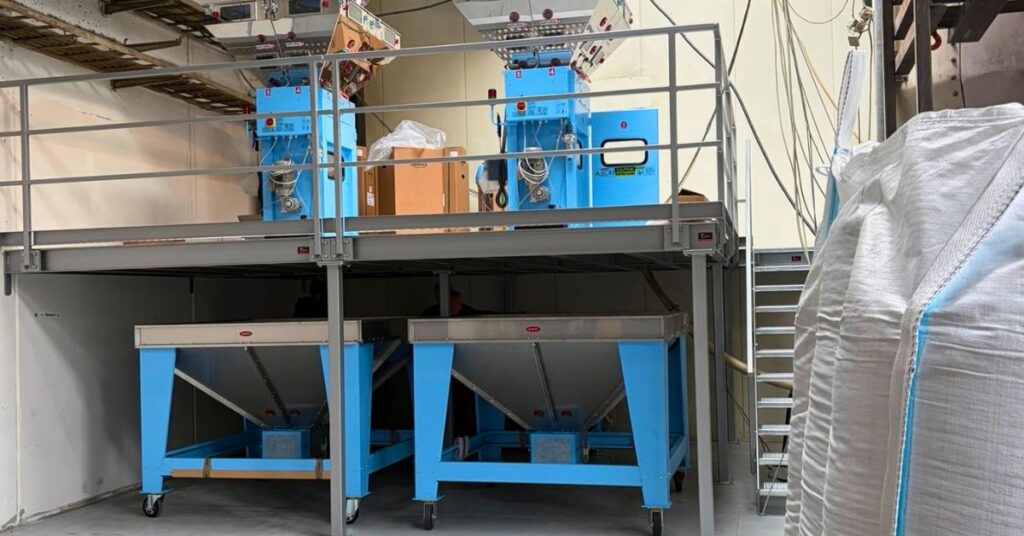
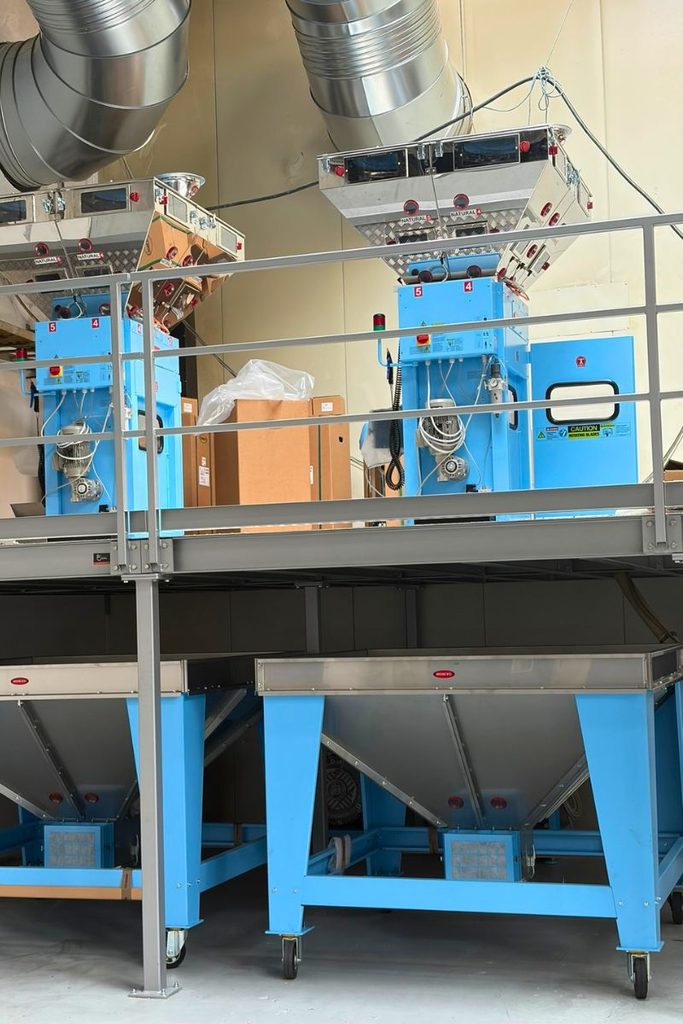
With the vacuum system, we draw the material directly from the individual big bags. This allows us to dose the raw materials much more precisely and continuously adjust the composition.
How does this enable you to make better use of the raw materials?
– If a material does not have quite the same properties as the others but can still be used, we can simply add a smaller proportion. This allows us to utilise the raw material without it negatively affecting the finished product.
Colour is a good example. We may receive a batch of raw material with a strong green tint. If it accounts for 30% of the mixture, the finished boards may take on a greenish hue. If we add only 5 or 10% instead, the colour is diluted by the other materials and is no longer visible in the same way.
This enables us to use a raw material that might otherwise have been difficult to utilise. At the same time, we become less dependent on specific suppliers because we have greater flexibility in combining different raw materials.
What does the system mean for quality and employees?
– When raw materials vary, it is important that we can adjust the mixture quickly. If our employees open a big bag and find that the material does not have the expected properties, they can immediately reduce the dosage.
The system also makes several work processes easier. For example, we use a moisture-absorbing additive to remove moisture from the plastic. Previously, this had to be added at each individual extruder. With seven extruders, that would in principle mean adding it at seven different locations.
Now, we can add the moisture-absorbing additive centrally at a single location. This makes the process both more efficient and easier to manage.
Does it also make switching between materials and colours easier?
– Yes, considerably easier.
Previously, we might have needed to run a silo almost completely empty if, for example, we wanted to switch to producing white boards. But a silo is never entirely empty. In some cases, there could be an additional half a tonne of material left in the system that had to pass through production. This could result in around an hour of additional production time.
The boards could be cut up so that the material could be reused, but we would still have spent time and energy processing it.
With the vacuum system, we can simply close one hose and open another. This means that only the relatively small quantity of material already inside the hose needs to pass through before the changeover is complete.
The new system therefore gives us greater flexibility and control – over the raw materials, the quality and the production process itself.