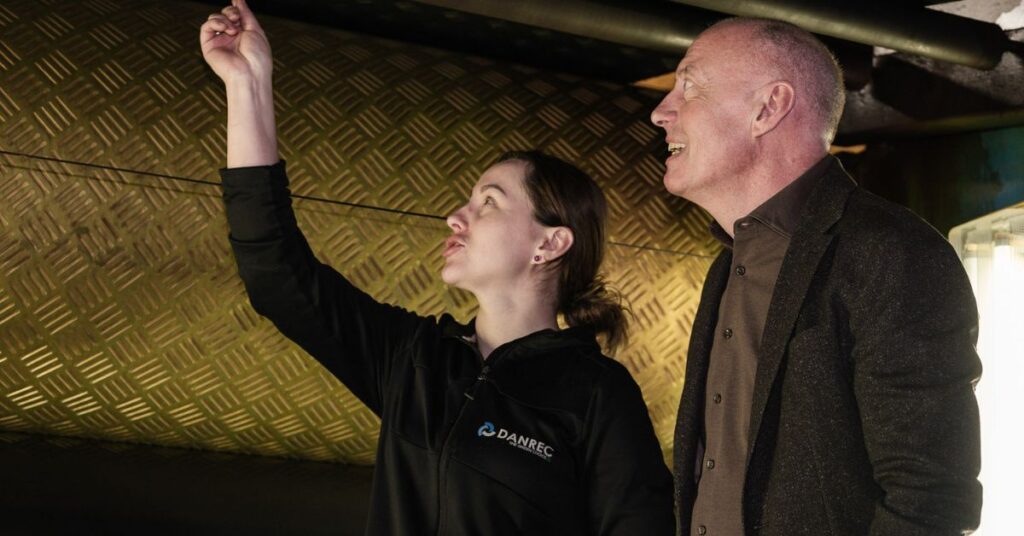
Old plastic bags, used ice-cream tubs and empty shampoo bottles get a new life when DANREC recycles the plastic into DAN-Board sheets sold across Europe. The company in Karup has proven that it is possible to be both profitable and green.
When a German hausfrau – or hausmann – squeezes the last drops from a curry ketchup bottle and sorts it correctly into the plastic container, that bottle is transformed into granulate and reborn as a DAN-Board sheet from DANREC.
All DANREC ground protection mats and grass reinforcement sheets are made from 100% recycled plastic, and 95% comes from household waste. DANREC is living proof that caring for the environment and generating profit can go hand in hand.
“You can earn good money from the green transition. We are growing and can sell even more. A typical industrial company has a profit margin of 5–6%, while ours is above 15%,” concludes DANREC’s CEO, Henrik Immerkær Ohm.
From his office at the factory in Karup, loud drilling and hammering reveal that a new production line is under construction. Five years ago, the company had two production lines. When the new facilities are completed later this year, DANREC will operate four.
Ahead of its time
DANREC was the first factory in Denmark built to receive plastic waste for sorting and recycling. The company was founded in 1992 by the German company ARAN Holding with EU funding. The agreement was that municipalities would supply plastic waste to be converted into recyclable granulate. The road to success, however, was long – DANREC was ahead of its time.
“Agreements had been made with municipalities to deliver plastic, but in the early 1990s none of them were sorting household waste,” says Henrik Immerkær Ohm.
DANREC therefore had to import recycled plastic from Germany. Work volumes were modest. The company had only three production employees working three days a week and a Swedish director visiting every second week, while accounting was handled from Germany.
Besides producing granulate, the company had one machine for making smooth plastic sheets used for agricultural feed boxes. Production was so limited that the German owners considered closing the Danish operations.
A bestseller is born
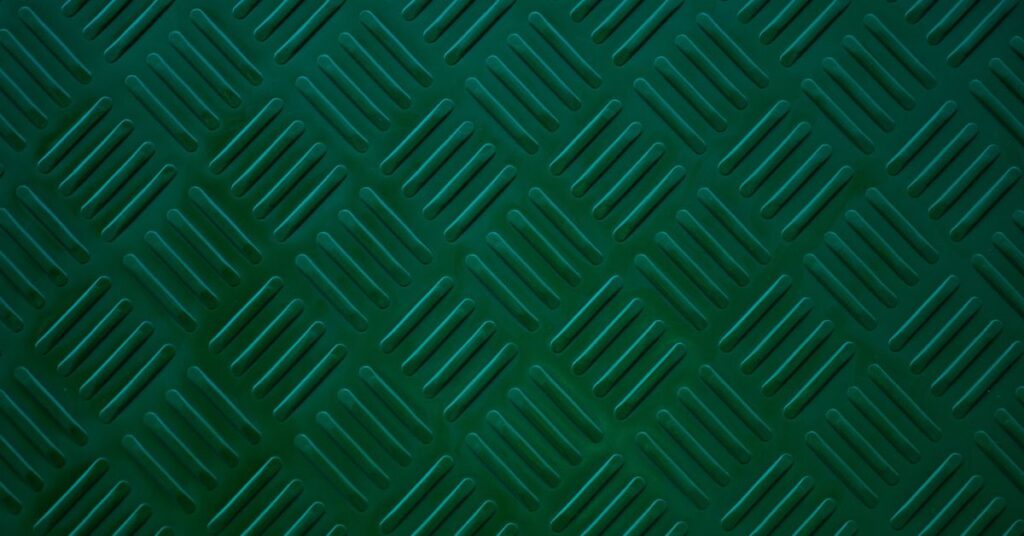
The turning point came when the agricultural sector began requesting ribbed sheets to place under feed boxes so piglets could not push them around. DAN-Board Classic was born – and remains a bestseller today.
“We also gained a permanent director and a more professional approach,” says Henrik Immerkær Ohm, who joined DANREC as CEO in 2021.
From agriculture, DAN-Board expanded into contractors and DIY chains, and in 2018 DANREC entered the German market. Revenue was DKK 36 million in 2020 and reached DKK 102.4 million in 2025.
Plastic from 150,000 citizens
While recycling is now seen as a strength, it was different in the early years.
“In the past, using recycled materials was almost something to be embarrassed about. Today, it is something we emphasise,” says Henrik Immerkær Ohm.
DANREC uses more than 8,000 tonnes of recycled plastic annually. Since each citizen consumes approximately 50 kilos of plastic per year, production corresponds to the consumption of around 150,000 citizens. Most granulate comes from Germany, Belgium and Italy, some from Norway and very little from Denmark
“We tend to believe Denmark is a leader in the green transition because of our wind turbine success story, but we are actually the worst country in the EU at sorting household waste,” he notes.
Difficult to sort household waste
Henrik Immerkær Ohm moved to Germany in 1992 and immediately learned to sort waste. That same year Germany introduced nationwide sorting. Unlike Denmark, Germany uses a unified system across the country – a system now adopted in Poland, Austria and Switzerland, making recycling far easier. In Denmark, each municipality has developed its own system.
“I don’t understand why Denmark didn’t look to Germany, with 30 years of experience, and adopt their system instead of letting 98 inexperienced municipalities create their own,” he emphasises.
In Denmark, plastic is collected as a mixed fraction, but no facility is large enough to process it fully. In Esbjerg, plastic is pre-sorted before being sent abroad for further processing, while a smaller facility in Mariager converts plastic into granulate.
“Household waste is difficult to sort because it contains many different types of plastic and various contaminants – even metal. It requires specialised facilities,” explains Henrik Immerkær Ohm.
Only recycled plastic
Although DANREC must import granulate, recycled plastic remains the more cost-effective option, as virgin material is significantly more expensive.
“We never use virgin plastic. It’s a principle – and it’s simply more expensive. Even though recycled plastic must be cleaned, granulated and transported from Germany, it is still cheaper than buying new material,” he emphasises.
Part of the explanation is that consumers help finance recycling.
“As consumers, you pay for waste collection, and that money follows the material through the system. We all pay for the waste we generate – and that’s a good model,” he says.
Grass reinforcement for runways
In 2026, DANREC will expand its range with a ground protection mat featuring structure on both sides. The company has also invested in a German business producing grass reinforcement systems.
Grass reinforcement is used, among other things, for grass runways, enabling aircraft to land and take off in wet conditions.
“It’s a simple product, but quality and durability requirements are high. You don’t land a €50 million aircraft on a surface that doesn’t perform. And the product must not release heavy metals or other harmful substances into the soil,” he emphasises.
The system was developed by a German engineer who worked on it for 20 years before retiring and selling his invention to DANREC.
“His wife thought it was time to focus on the grandchildren. He was a typical engineer – not the best salesperson. We have now applied our sales organisation and brought the product to market,” siger Henrik Immerkær Ohm.
The grass reinforcement is made from 100% recycled plastic from German households and fits naturally into DANREC’s portfolio.
Modern technology ensures efficient production
The company in Karup employs 35 people and continuously seeks new ways to optimise workflows. The latest initiative is the implementation of an AI agent that assists production staff with rapid fault diagnosis and troubleshooting, preventing downtime.
“Unlike our competitors in the East, we operate an extremely efficient production setup, which we continuously invest in while using modern technology to eliminate unnecessary tasks,” says Henrik Immerkær Ohm.
Four to five years ago, around 30 tonnes of waste were sent for incineration. Today, the figure has been significantly reduced. DANREC has improved sorting and recycling in both production and administration and reuses its own production scrap
“If we can sell our waste or give it away for recycling, we prefer that to sending it for incineration,” he emphasises.
Denmark’s greenest manufacturing company
Since early 2023, DANREC has had a clear objective of being a green company.
“We want to lead the way because the climate matters to us – and we work with recycled plastic. Beyond environmental responsibility, it shapes our identity. Our ambition is to become Denmark’s greenest manufacturing company,” says Henrik Immerkær Ohm.
From 1 January 2026, DANREC will source all energy from green sources – including its own solar park, covering approximately one-third of electricity consumption, and a wind farm near Ikast.
“We will reach our goal of being CO₂-neutral with zero waste. It may seem insignificant whether we sort our waste or not, but if everyone does it, it makes a difference. Sometimes you have to lead by example – then hopefully others follow,” he notes.
Waste volumes have already been significantly reduced, and the goal is for all waste to be recycled – from surplus plastic in production to coffee grounds from the kitchen.
“We will reach our goals, and I hope our employees are proud to work in a company that leads the way,” says Henrik Immerkær Ohm.